




The Outrageous Charges Killing Homebuilders
Homebuilders are paying outrageous, business-wrecking payments to prop up council planning offices where there far too few staff to get planning approvals off the ground.
After the Conservative Party Shadow Chancellor, Andrew Griffith, controversially announced plans to cut the cost of housing development by killing the Future Homes Standard and reducing planning red tape to improve the viability of housing developments and accelerate construction with a series of other measures, he will find himself emboldened by the report of another ‘stealth measure’ coming on top of other ‘stealth measures’ that has seen the cost of building a single family dwelling rise by £76,000 since 2026.
See the Fabrication & Glazing Eye article here
New research
Local authorities are increasingly relying on these additional payments from developers to resource the planning process, yet delays continue to hold up decisions on new housing. This has been revealed by new research from the Home Builders Federation (HBF) and Paragon Bank.
Between 2022 and 2025, councils responding to a Freedom of Information request received an average of almost £600,000 each through Planning Performance Agreement (PPA) fees.
Of the eighty-five responses received from local councils, 12 received more than £1 million through PPA fees over the last three years. The City of London received the highest amount during this period, taking home almost £5 million.
Why Planning Performance Agreement?
PPAs are intended to provide a framework through which applicants and local authorities can agree how complex planning applications will be managed, including key tasks, milestones, responsibilities, resources and timescales.
However, the report coming from the research warns that continued capacity pressures within local planning departments are contributing to PPAs being used increasingly as a means of securing dedicated resources to progress applications.
How long to get planning permission?
Growing reliance on these agreements, alongside Extensions of Time (EoTs), can also make headline planning performance statistics less representative of the length of time applicants actually wait for decisions.
What do delays do?
The consequences of these delays are particularly acute for SME home builders, which have fewer sites across which to spread the financial cost of delays. Repeated exposure to these costs can make SME developers less willing or able to pursue future schemes. Over time, that risks driving experienced developers from the market, limiting housing delivery.
Where are the planners?
The findings come against a backdrop of persistent staffing shortages across local planning authorities. Previous HBF research shows that 90% of council planning departments are now operating below full capacity, with an estimated 2,660 additional planning officers needed across England and Wales. This is a 20% increase from previous research a year earlier.
To address these issues, the report calls on government to:
-
Ensure transparency by requiring local planning authorities to publish annual information on the value and allocation of PPA income received.
-
Develop a more consistent national framework for PPA structures, charging schedules and service standards to reduce variation between authorities.
-
Publish updated guidance on when PPAs and EoTs should be used and how realistic timelines should be agreed. Their use as a routine response to resource constraints should be discouraged.
-
Continue investing in the recruitment, retention and training of planning officers, specialist consultees and technical experts to address the underlying capacity challenges that contribute to delays.
Need for staff and equipment
Neil Jefferson, Chief Executive at HBF said: “The planning system needs to provide certainty, transparency and timely decisions if we are to increase housing supply. Persistent capacity constraints are making that increasingly difficult.
“Planning Performance Agreements have an important role to play in helping manage complex applications, yet they should not be relied upon to make up for wider capacity shortages in the planning system. Additional fees cannot become a substitute for a planning system that is properly staffed and equipped to deliver.”
Dampening delivery
Neal Moy, Managing Director at Paragon Development Finance said: “This research highlights an issue that many developers we work with regularly experience. When planning timelines become unpredictable, the impact is felt throughout the development process: developers are forced to commit additional resources for longer periods, which creates greater uncertainty for lenders around delivery programmes and funding timelines. Over time, this dampens confidence to invest and ultimately slows the pace of housing delivery.”
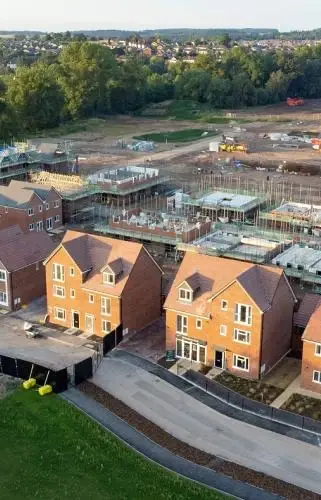
Picture: Developers are helping to fund understaffed, failing planning departments. Read the Analysing the Impact of Planning Performance Agreements report on the link below.
Local authorities are increasingly relying on Planning Performance Agreement payments from developers to resource their failing planning departments.